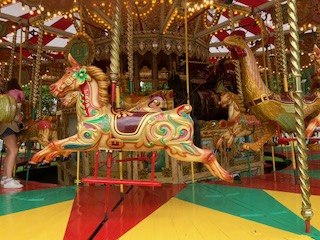
There’s something about them. The painted horses bobbing up and down. The wild organ music. The smiling children holding onto the pole with one hand and waving with the other as they go round and round.
Carousels may sit at the centre of many a fairground, but they also occupy a special place in our memories and imagination, frequently cropping up in songs and on screen. Joni Mitchell, for example, develops a carousel metaphor in The Circle Game. “The circles,” she sings, “go round and round, and the painted ponies go up and down.” We are, she says, “captive on the carousel of time”.
A similar image of circularity and confusion lies at the heart of Noel Harrison’s The Windmills of Your Mind — “Like a carousel that’s turning, running rings around the moon.” The Hollies, in their 1967 hit On a Carousel, capture the giddy, repetitive nature of romantic obsession, while Kacey Musgraves in Merry Go ‘Round uses the carousel as a metaphor for being trapped in circular motion – “Just like dust, we settle in this town/ On this broken merry go ’round/ And ’round and ’round we go /Where it stops nobody knows”
Perhaps the most haunting song about carousels inTownes Van Zandt’s Fare Thee Well, Miss Carousel . Here the carousel is the focal point for Van Zandt’s existential musings about life and death – the carousel is someone or something both seductive and destructive.
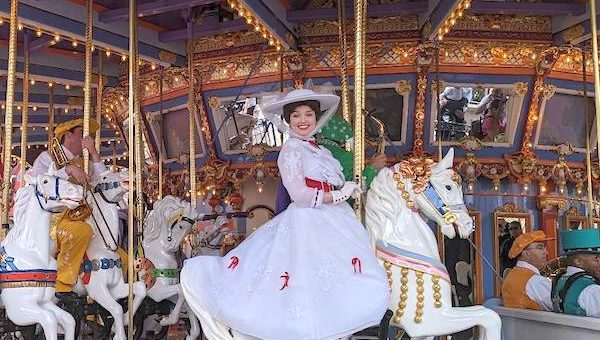
Cinema, too, loves a carousel. In Mary Poppins, the magical nanny and Bert take Jane and Michael on a journey into a chalk drawing, riding carousel horses that come to life. It’s pure enchantment, the carousel serving as a gateway to wonder — painted horses galloping through an animated landscape where anything is possible.
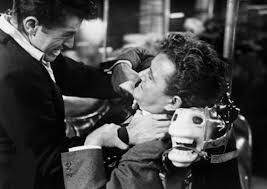
In contrast, Hitchcock’s Strangers on a Train makes us feel very differently about the fairground ride. The climactic fight takes place on a carousel that’s spinning out of control. The painted horses blur, the music distorts, and suddenly this childhood pleasure becomes genuinely menacing. It could almost make you want never to get on one again.
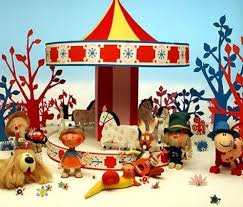
Those of a certain generation will remember The Magic Roundabout, that surreal British children’s TV show from the 1960s and 70s, where Dougal, Florence, and Zebedee gathered around the eponymous carousel. The programme has a dreamlike quality in which the ordinary and the extraordinary blended together, with the carousel at its centre — part playground, part portal to adventure.
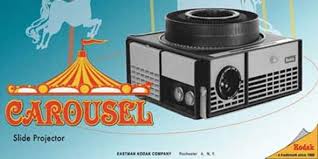
More recent television drama has also explored the attraction of the carousel. In Mad Men, Don Draper famously rechristens Kodak’s new slide projector in the final episode of the first season. The company calls it The Wheel. Don calls it something else entirely.
Standing in a darkened boardroom, he clicks through slides of his own family and reframes the device not as technology but as memory. “This isn’t a spaceship,” he says. “It’s a time machine.” And then he gives it its name. “It’s not called The Wheel. It’s called The Carousel. It lets us travel the way a child travels — around and around, and back home again, to a place where we know we are loved.”
It’s one of the most affecting scenes in the series, not least because of the irony at its heart. Don is selling nostalgia even as his own life begins to spin out of control. The carousel promises return, but not resolution — a perfect modern expression of the same circular longing that runs from Joni Mitchell to J. D. Salinger.
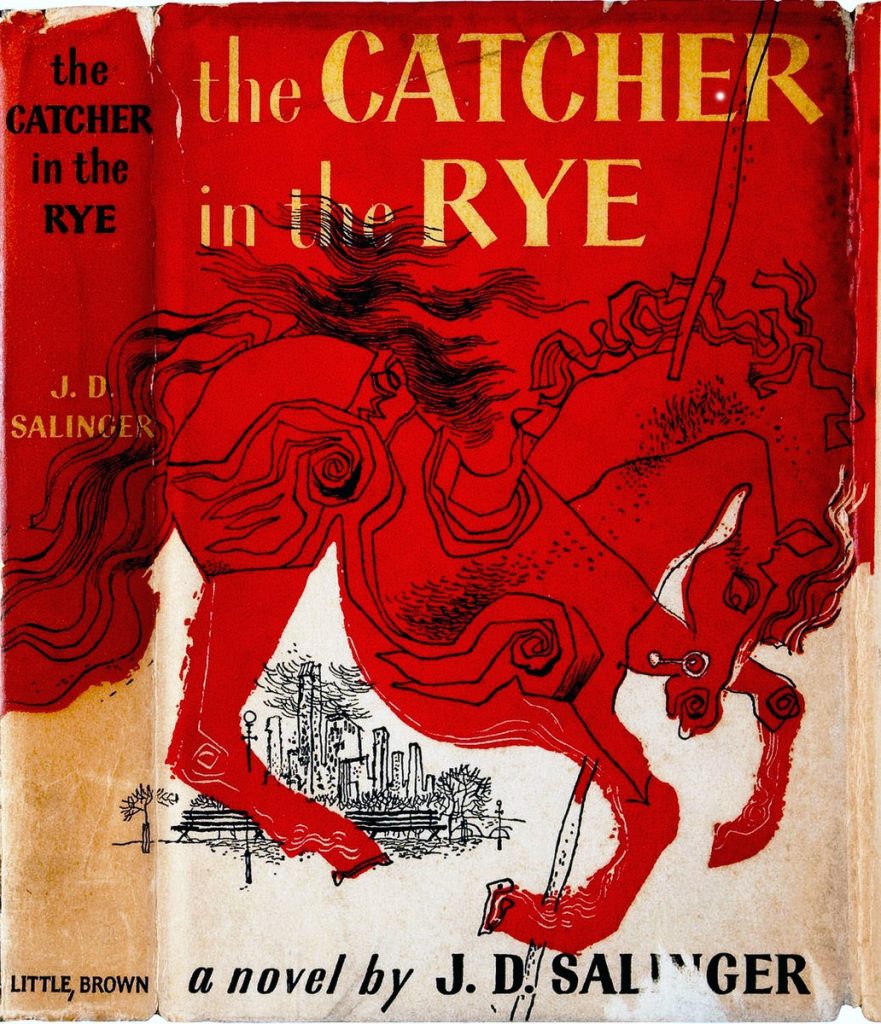
Towards the end of The Catcher in the Rye Holden Caulfield finds himself watching his sister Phoebe riding the carousel in Central Park. After everything he’s been through, all his cynicism and disillusionment about the adult world, he is suddenly, unexpectedly happy. “I felt so damn happy all of a sudden,” he says. The carousel becomes this perfect image of childhood innocence – circular, repetitive, but somehow still magical.
Carousels have even featured on stage. The Rodgers and Hammerstein musical Carousel tells the story of Billy Bigelow, a carousel barker who falls in love with Julie Jordan. The carousel is central to the story – it’s where they meet, where Billy works, and it becomes a symbol of their circular, troubled relationship and the cycles of behaviour that trap them both.
Why do carousels work so well as symbols? Perhaps it’s because they belong to fairs and parks, those temporary, magical places that exist just outside normal life. Perhaps it’s the way their circularity makes them perfect for stories about time, memory, and the past. Or perhaps it’s that there’s something unsettling about them, even when they’re at their most cheerful.
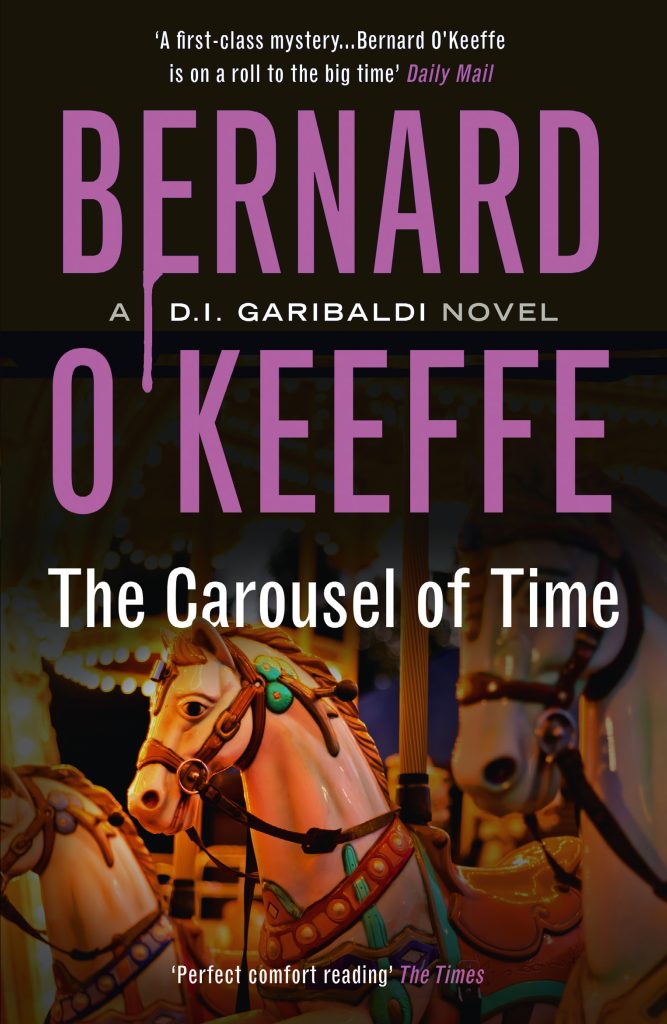
A carousel is at the heart of my latest DI Garibaldi novel, The Carousel of Time. Its title comes from that Joni Mitchell song, but the carousel is real rather than metaphorical. It’s the carousel at Barnes Fair. Every summer, four friends take a ride on it in memory of Esther, a school friend they lost in a car crash they were all involved in as teenagers. It’s their ritual, their way of commemorating the past.
This year, the morning after the fair, one of those friends, Shelley Gregory, is found murdered on that very carousel.
Who killed her, and why was she killed there? Is her murder linked to the tragedy the friends commemorate each year, or do the answers lie closer to home, in leafy Barnes, where dark things lurk beneath?
Ride the carousel yourself
Listen
The Circle Game – Joni Mitchell https://open.spotify.com/track/6MYDgkfu34kRRIdMfleVCV
Windmills of Your Mind – Noel Harrison https://open.spotify.com/track/3GpqJYxHJICPUyYOFuPIYG
On a Carousel – The Hollies https://open.spotify.com/track/05Vur1NsBkcw9DQteuhF89
Fare Thee Well, Miss Carousel – Townes Van Zandt https://open.spotify.com/track/71sJjrNiDMM4oGNmgyPg
Watch
Watch the Strangers on a Train carousel scene: https://www.youtube.com/watch?v=75ACQveD9ac
Watch the Mary Poppins carousel scene: https://www.youtube.com/watch?v=tJ2vHebMygc
Watch the Don Draper ‘carousel’ pitch https://youtu.be/suRDUFpsHus